
Unmanned Ground Vehicles Optimize Counter-UAS Sensing
High performing counter UAS (CUAS) solutions must provide small units with resilient, mobile sensing capabilities while moving and stationary. Effective systems deliver reliable early warning by maximizing azimuth coverage and detection range, while maintaining low signatures to reduce vulnerability to enemy targeting.
Placement is Critical to Sensing
When mobile units enter a stationary period, they select terrain that provides the best cover and concealment. Many of those terrain features – such as hills, ridgelines, dense vegetation, and urban structures – obstruct line‑of‑sight to the surrounding airspace.
These conditions limit detection performance, particularly when sensors are concentrated together or deployed in small numbers.
To mitigate these constraints, a distributed geometry of multiple, optimally positioned sensors provides improved coverage and survivability during realistic force‑on‑force operations. Distributing sensors increases detection probability, enables earlier identification, and eliminates blind avenues of approach.
Technique Enhances Survivability
In complex terrain, locations that offer the most advantageous sensing position are often undesirable for manned vehicle emplacement due to survivability and signature considerations.
Employing small unmanned ground vehicles (UGVs) as sensor carriers enables placement and powering of counter‑UAS sensors in tactically advantageous positions while minimizing risk to personnel and manned assets.
Advantages of UGV Sensor Deployment
Enhanced Early Warning: UGVs enable sensor placement at optimal positions and offsets, increasing coverage area and improving detection timelines.
Reduced Signature: UGVs present a significantly smaller physical and electromagnetic profile than manned vehicles and use onboard hybrid power systems to support low‑signature operations.
Asymmetric Cost and Risk Reduction: UGVs are lower‑cost than manned vehicles and do not require continuous operator presence. Loss of an individual UGV represents a comparatively negligible impact compared to loss of a manned vehicle.
Easily Integrates with Formation
Counter‑UAS sensors and effectors can be mounted onto the modular UGV load deck, which provides organic mobility and electrical power.
UGVs may be deployed individually from light tactical vehicles such as the ISV‑Utility or in quantity from medium tactical vehicles such as the FMTV.
Once deployed, UGVs can be positioned through autonomous navigation, teleoperation, or tethered control methods.
Critically, the sensing architecture remains persistent and operational, keeping the manned vehicles available for tasking to other assignments and positions. This enables sustained counter‑UAS coverage without degrading flexibility or increasing exposure of personnel and high‑value platforms.
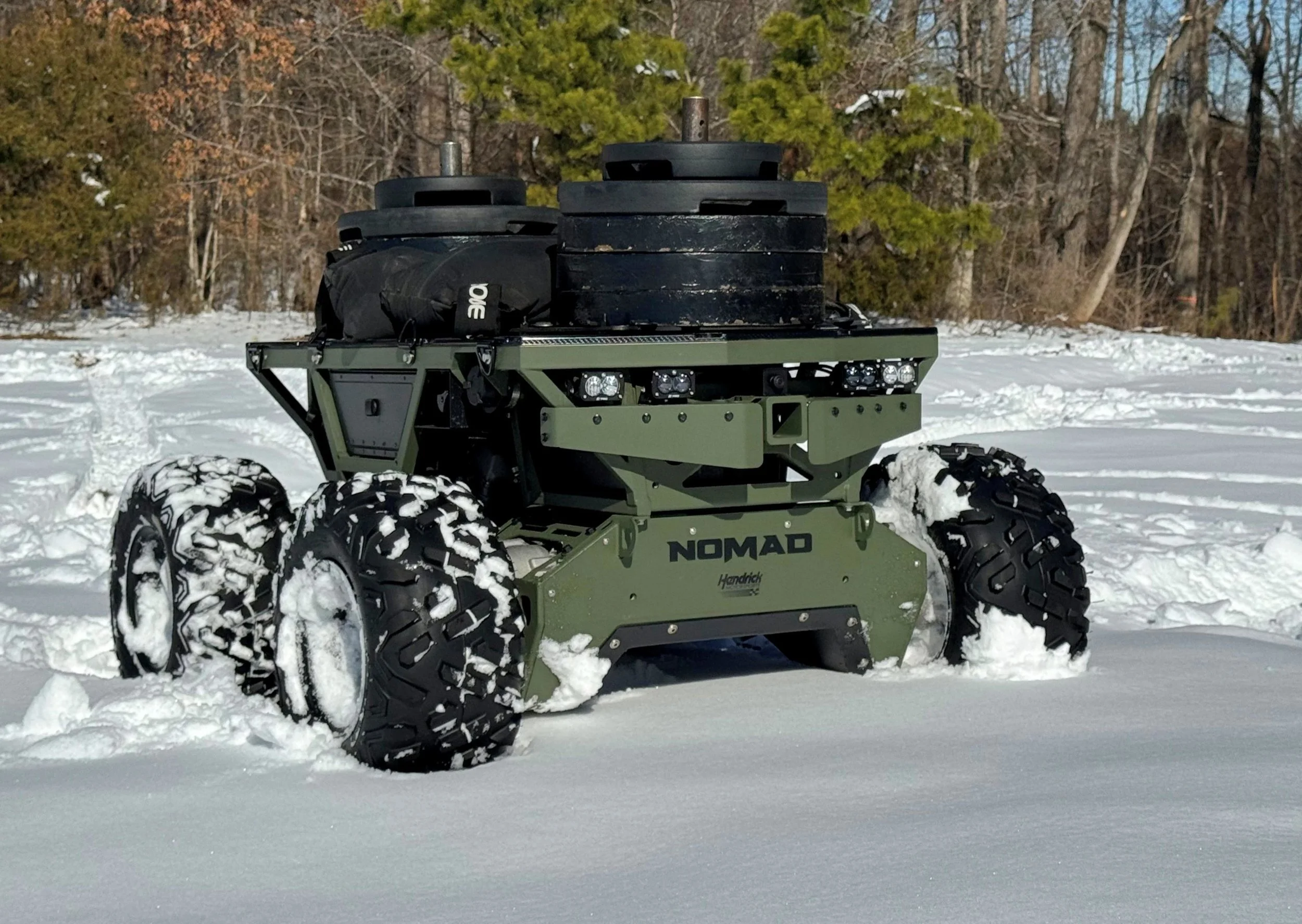
Nomad® unmanned ground vehicle (Hendrick Technical Solutions)
Nomad® UGV paired with Fury autonomy (Scout AI)
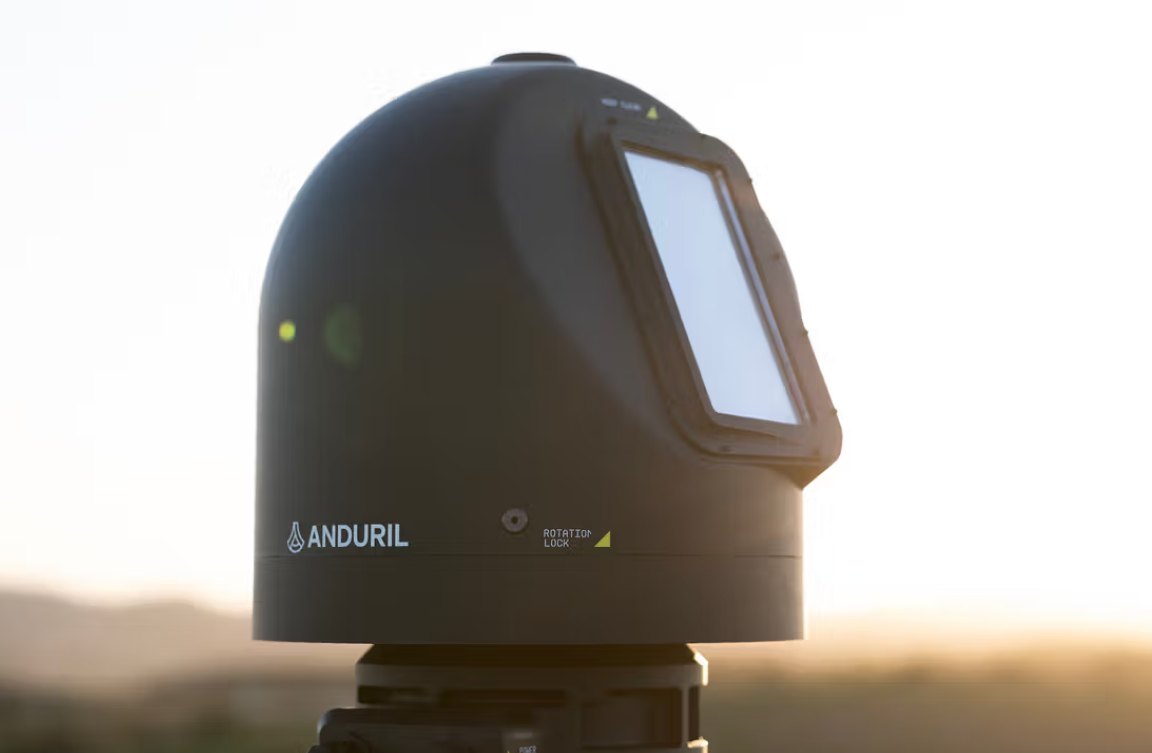
Wisp infrared imaging sensor (Anduril)
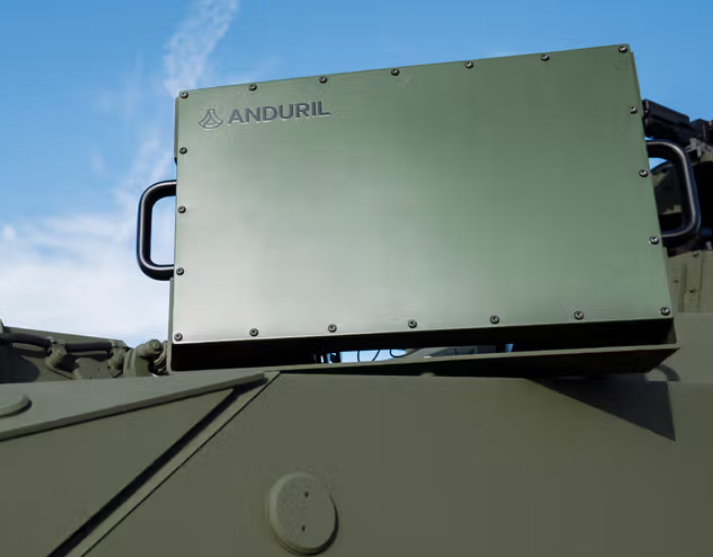
Spark dual-band radar sensor (Anduril)